Summer Hike


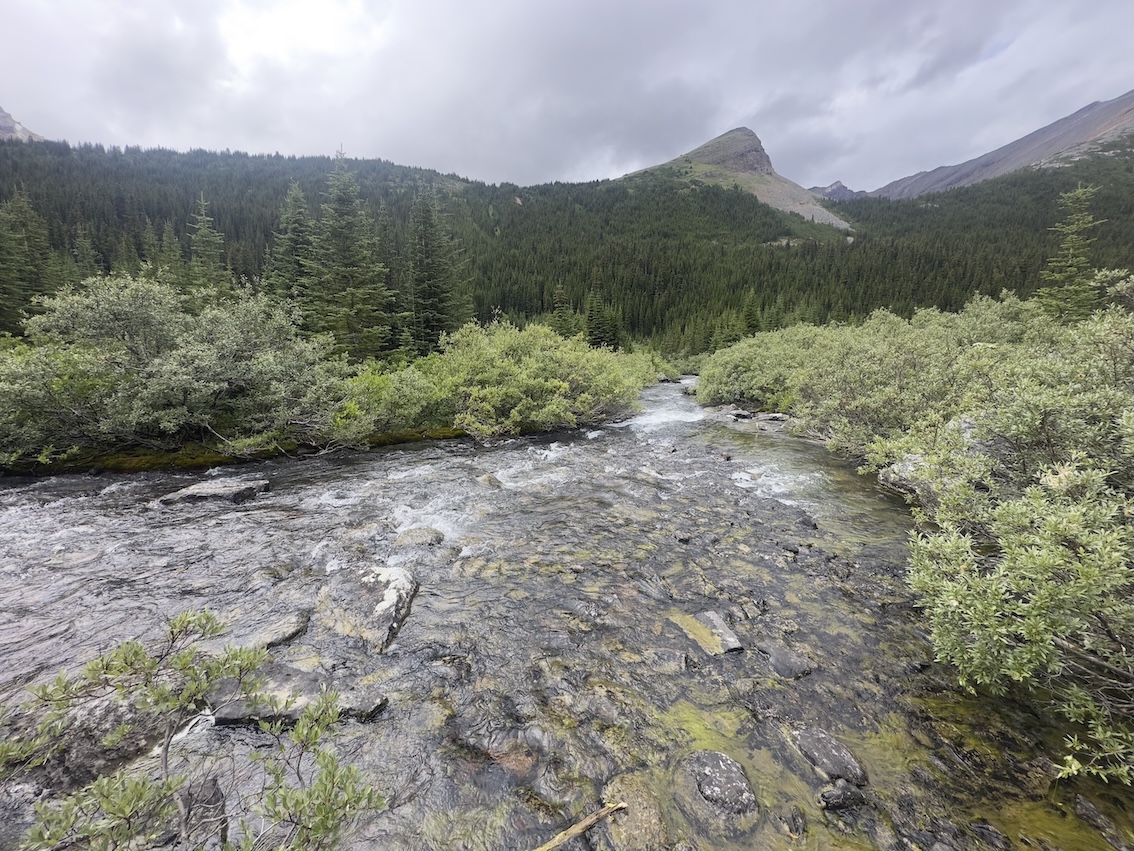
Day hikes and camping might be the most common ways Albertans choose to catch their breath in the great outdoors during the summer, but backpacking combines those two activities to make the experience greater than the sum of their parts. Still, it helps if folks are hardy enough and willing to put in the effort to hit those paths less travelled.
Backpacking might merely be a blip on provincial tourism’s radar screens, as the pursuit is often lumped into other activity data. But according to a 2024 Statistics Canada report, there’s no argument that backpacking has contributed to the record 38.1 million visitors to Alberta, with the province raking in $14.4 billion in tourism revenue.
As someone who started backpacking as a kid and has been traversing the wilderness for 25 years, I can safely say it is an activity that is as rewarding as it is arduous. The further out you’re willing to trek, the deeper into the mountains you go, the less polluted the air gets with those invisible radio waves and exhaust. That lends a lightness and a more humbling view to the surroundings.
It also demonstrates a deeper appreciation for fresh air and getting away from the hustle and bustle of cities, in favour of hitting the trails for their getaways. It’s impossible to forget the invigoration that comes from pure wilderness air!
—
Geraldine Lakes Trail
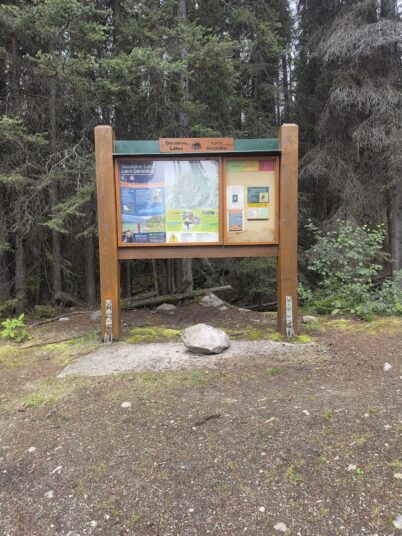
Last August, my cousin Kyle and I spent three days backpacking in Jasper National Park, more specifically, the Geraldine Lakes Trail, nearly 400 km from Edmonton. It’s hardly a walk in the park, so to speak, and definitely not for the faint of heart, regardless of experience.
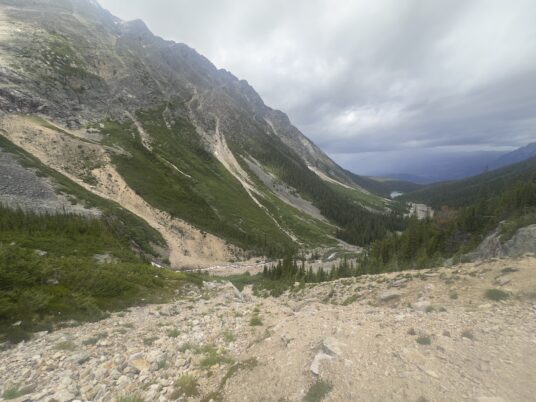
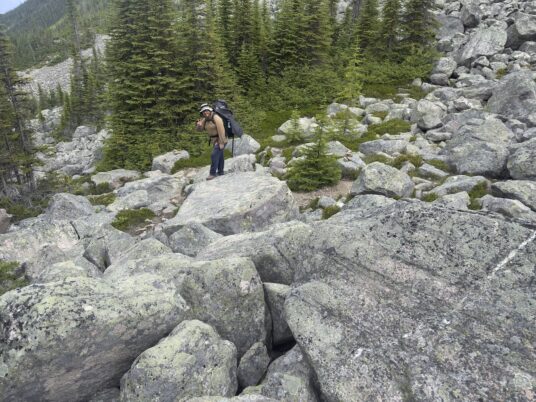
The vast majority of the path to the camp consists of rocks of various shapes and sizes, requiring constant concentration, especially if you are so lucky as to catch a bit of rain, like we did. Many of these rocks, particularly when they’re slick, require leaping from one to the next, which—with a 30-50 lb. pack on—can feel more like little leaps of faith at each jump.
Day One
The drive up to the trailhead was a real hike for the Jeep. It would have been unlikely for a car without all-terrain features to make it all the way, winding through elevation and the occasionally grisly road.
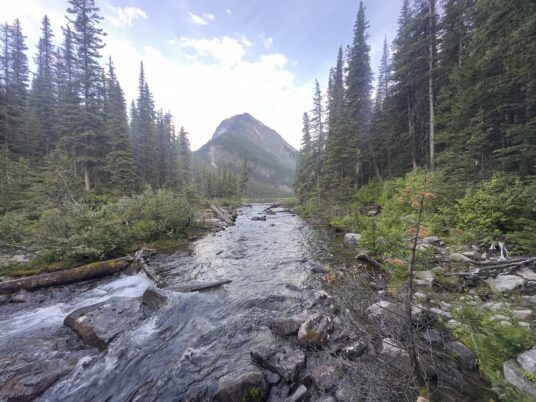
Once parked, we got to changing into our boots and adjusting our packs, and we were off. Surrounded by beautiful, lush forest, the path had inclines right off the hop, but that was easy compared to what was to come. There is a certain meditative comfort in putting one foot in front of the other on a dirt-laden path, the mind able to drift into the unifying ambience of nature.
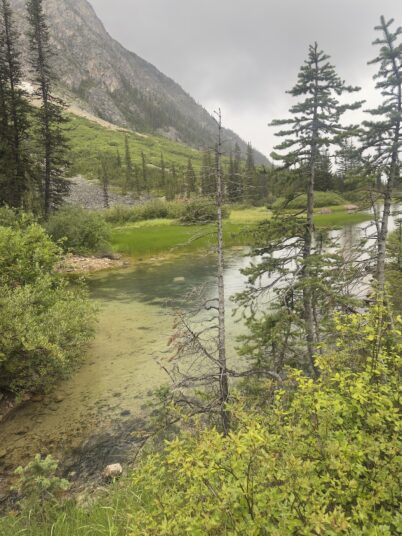
In this state of contentment, we reached the first of the two Geraldine Lakes on the trail we selected (there are four Geraldine Lakes in the area). The echo there was amazing! Every funny bellow rang out time and time again; it was equally impressive and entertaining. But we had a late start to the day, so we had to carry on after a quick drink of water, following the edge of the lake until we reached the south side of it.
By then, about 2.8 km in, we faced an onslaught of rocks and steep climbs. At first, it was patches of giant rocks between a path and another unmarked path of giant rocks, then a near-vertical climb, and another. After that, the trek involved nearly jumping from rock to rock with a very vague outline of a path, marked by inukshuks—piles of small stones—to show the way.
We had chosen this trail because our late start caused us to want a trail with a short hike to the site, but with beautiful options for the next day. When we initially went to the information booth, the guy there told us it would only take about two hours to make it to the second Geraldine Lake campsite, which was 6.2 km from the trailhead. He couldn’t have been more wrong.
This wasn’t your standard switchback terrain. It turned out to be one of the most rugged trails we had ever hiked! It was dark long before we made it to camp, nearly six hours after we had started. After setting up our tent and making a quick dinner, we went straight to bed.
—
Day Two
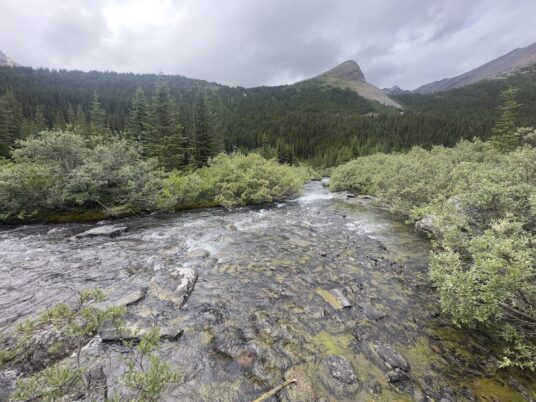
The second Geraldine Lake campsite was spectacular. The stream was right beside the picnic tables, making for quick access to water refills and dish washing, and there were lockers for the food, so we didn’t have to hang the food bags from the usual pulley system.
After a relaxing breakfast, we started off on our day hike to the next lake. The path was hidden, to put it mildly, and it took us a lot longer to get there for lunch than it did to get back, as we were able to follow our own trail. It may have been a pain, but carving our own way also lent us a feeling of extra adventure.
As we returned to the second Geraldine Lake camp, another group of backpackers arrived. They were from Denmark, and only one of the guys really talked to us. He said he’d been to the Canadian Rockies a couple of times before and loved them so much that he wanted to show his friends. He was in good spirits, but it looked like his friends had bitten off more than they could chew. It truly was a brutal trail, so I don’t blame them for their reactions to the terrain!


—
Day Three
The next morning, we ate breakfast, packed up and headed back to the trailhead. Going back down a near-vertical slope is a lot scarier than going straight up, but it certainly makes for a better time, so we managed to get some good distance in over the rocks before it started pouring.
And it really, really poured. Over many slippery rocks we hopped. Thankfully, most of the types of moss on the massive boulders acted as an anti-slip grip, but we had to remain ever-vigilant, as some of that vegetation could produce opposite results.
Our knees were getting pretty knackered, and we were soaked from head to toe, each step a puddle in our boots. But we kept on in a silent march, taking it all in as we pushed our bodies to the extreme. There were wild blueberries lining much of the forested path, so I ate a bunch to give me that final push of vitality, and we made it back to the trailhead shortly after it stopped raining.
Geraldine Lake Trail is about as rugged as a short trip gets, not quite what one may want to hear when trying to work past the mental block of a daunting first trip. However, there are plenty of other mountains to climb, better suited for people who have to remain gentle on their knees and ankles.
Still, for those willing to traverse precarious footing and climb slopes steep enough that one misstep could have you sliding down the side of a mountain, it is worth the magnificent effort.
Tips for Beginners
- -Make sure to pay attention to the elevation gained on the trail, not just the distance to the site, when picking your trail.
- -Visit the information booth in town before heading out. They will let you know the current trail conditions, whether fires are allowed at your site, and if there have been any bear sightings in your selected area.
- -Start collecting your supplies months in advance. The initial big purchases can be pricey, so look out for good deals with good warranties. Good quality gear should last you many seasons to come.
- -Double-check all your equipment before you go. Make sure your sleeping bag zipper is functional, there are no holes in your mat (if it’s inflatable), and that you have all the pieces for your tent.
- -Your mental endurance is just as important, if not more, than your physical endurance. A strong mind can carry tired feet far!
- -Brace yourself for all sorts of toilet stations, as many of them don’t have walls or roofs.
- -Remember, you won’t have cellphone service! Keep your phone on airplane mode to preserve the battery, as it will keep scanning for wifi and cell towers to no avail.
- -Pack the heaviest stuff in the bottom of your backpack and keep snacks handy in easy-access pockets.
- -Make sure to learn how to properly fit your backpack on- it makes all the difference when it comes to comfort and centre of gravity.
- -Never keep any food in your tent. Always store your food bags and garbage away from the tent and out of reach of bears.
Toe-saving tips!
Buy your boots half a size bigger than your normal size, break your boots in before you hit the trailhead, and tie them tight! It’ll save your toes when you’re trekking downhill. And don’t forget to clip your nails before you head out!
Pack list
- Backpack
- Rain cover for pack
- Water bottle
- Water purification tablets or UV light filtration device
- Head lamp
- Backup light
- First aid kit
- Moleskin
- Sleeping bag
- Tent
- Mat
- Under layers
- Light, warm jacket
- Two pairs of socks per day on the trail
- Waterproof hiking boots
- Hat
- Sunscreen
- Lighters
- Lots of spare garbage bags and Ziplocks
- Toilet paper (store in Ziplock)
- Portable stove
- Portable Propane tank
- Ultra-light cooking pot
- Utensils
- Utility knife
- Quick, light snacks
- Food for breakfasts, lunches and dinners
- A day pack
- Toothbrush
- Bear spray
- Quick-dry cloth
- A light pair of comfy shoes for the campsite
- Bungee cord or rope
- Carabiner clip
- Bug repellant
- Optional extras:
- Fire starter
- Saw
- Axe
- Notebook
- Plant and mushroom guidebooks
- Small pillow
- Cards
- portable chess set
- Hammock
More Like This
Local Communities cheering on the World.
Read
Refreshed Local Facilities
Read
Pickleball
Read
Upcoming Events